
Emme Wines
About
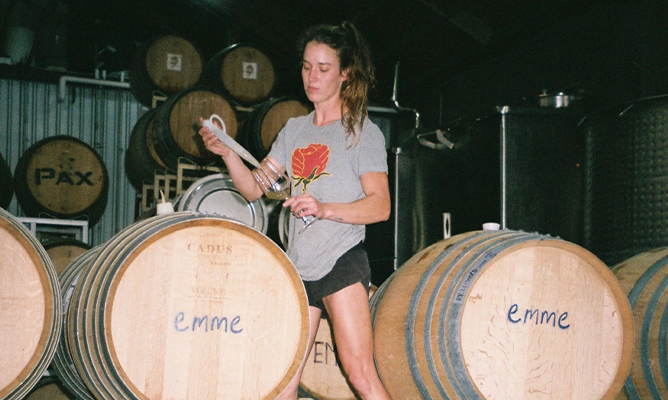
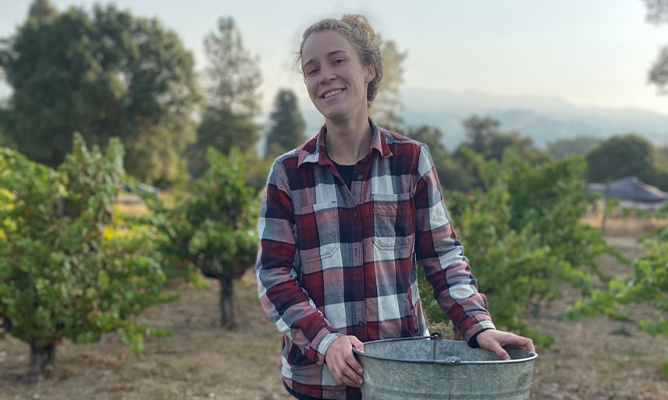
Rosalind talks about her journey across various jobs and harvests as being the backbone of a unique trajectory in terms of developing her sensibilities: “I certainly didn’t start in wine where I ended up. The research winery at Gallo was a maximal intervention, high alcohol sort of place, unsurprisingly. The second harvest I worked, in the Barossa, was a huge facility focused on a similarly big and rich style. But by my third harvest, I’d ended up at a small family winery in Bordeaux. The wines weren’t necessarily low alcohol, but they were lower than what I’d had before, and the nature of the winery being small and family-run meant that the winemaking style was more focused on the farming, and less on intervention in the winery. I liked working in Bordeaux better than my previous two harvests, and I liked the wines better, so moving forward I gravitated towards smaller and more farming-focused wineries.”
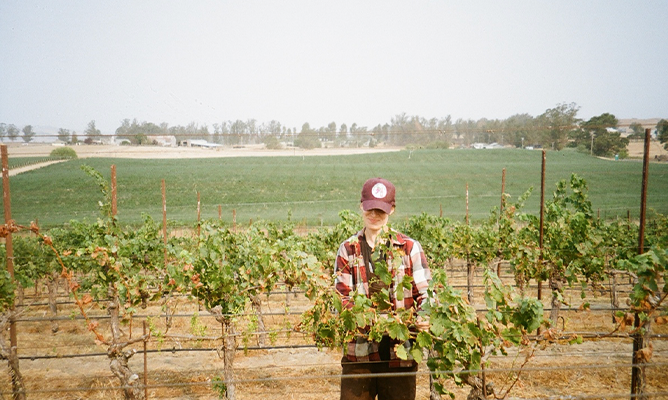
As of 2018, Rosalind found her way back to California for her permanent work; she’s a full-time employee at Pax Mahle’s cooperative winemaking facility. There, the community of winemakers has helped her develop as a producer, in addition to connecting her with various farmers of vines that have become friends and partners. Rosalind now works with four vineyards in total in a long-term contract form, meaning she partners with them and buys their fruit each year (in addition to the one tiny plot of Syrah in Graton, CA that Rosalind farms herself). These three organically-farmed sites are the Ricetti Vineyard in Redwood Valley, with which she has a special relationship; Nakai in Russian River Valley; and Shake Ridge in Amador County.
The focus in Emme Wines, in terms of what’s in the bottle, is on some of the lesser-known varieties planted in California, such as Carignan, Colombard, etc. The 80 year-old Ricetti Vineyard is therefore special to Rosalind and it houses grapes on which she focuses her production. The winemaking is straightforward and unfussy; the style is transparent, low-alcohol, but elegant, with clear expressions of each variety or in each cuvée, despite what can often be the bruising California climate. We’re really pleased to add these technically adroit and evocative wines to our representation of domestic winemaking here in the U.S.; Rosalind’s intelligence and clear hand with lots of practice are gifting us with some clear, precise, and deeply delicious renditions of lesser-known pockets and varieties across California viticulture. Quantities are small to begin, so don’t miss our first arrival of these!
Products
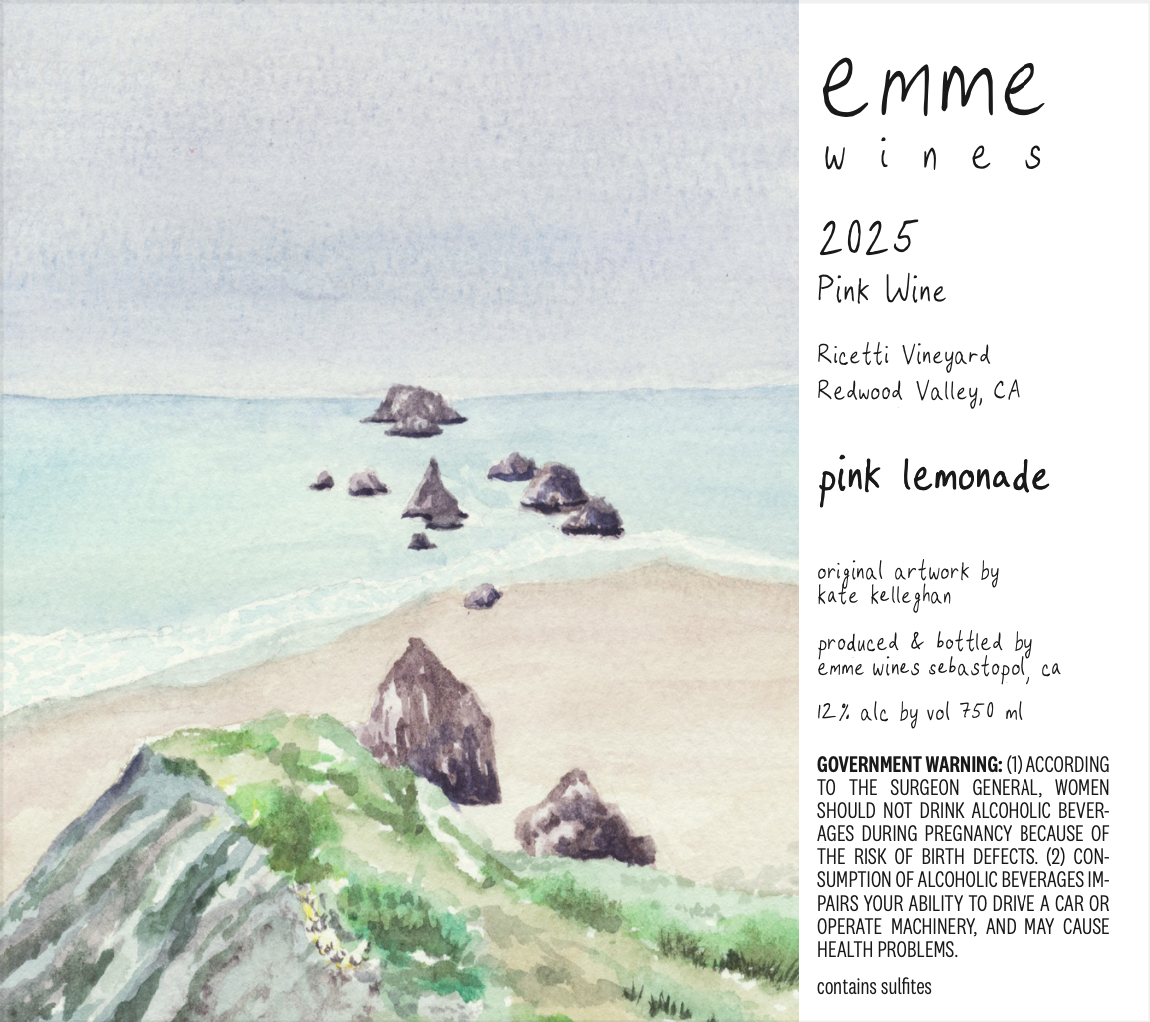
Red Blend 'Pink Lemonade' Ricetti Vyd.
Organic. Abouriou, Zinfandel, Colombard, Valdiguié, and Carignan from the dry-farmed Ricetti Vineyard in Redwood Valley. The vineyard was harvested in two passes according to the ripening patterns of the varieties. The earlier-ripening Abouriou and Zinfandel, along with a portion of the Colombard, were crushed and macerated on the skins for eight days to extract tannin and color. The fruit was then pressed to stainless steel to finish primary fermentation. Once dry, the wine was racked to neutral barriques for six months of aging. The later-ripening Valdiguié and Carignan, along with the remaining Colombard, were partially crushed, with half of the fruit left intact at the bottom of the tank for carbonic fermentation. After five days, the partially fermented fruit was pressed to stainless steel to finish primary fermentation. Once dry, the wine was racked to neutral barriques for five months of aging. The two components were racked out of barrel, blended, and returned to tank before bottling. Indigenous yeast fermentation. Unfined and unfiltered, with <30 ppm total SO2. The cuvée is named for the electric-pink color of the juice during fermentation.
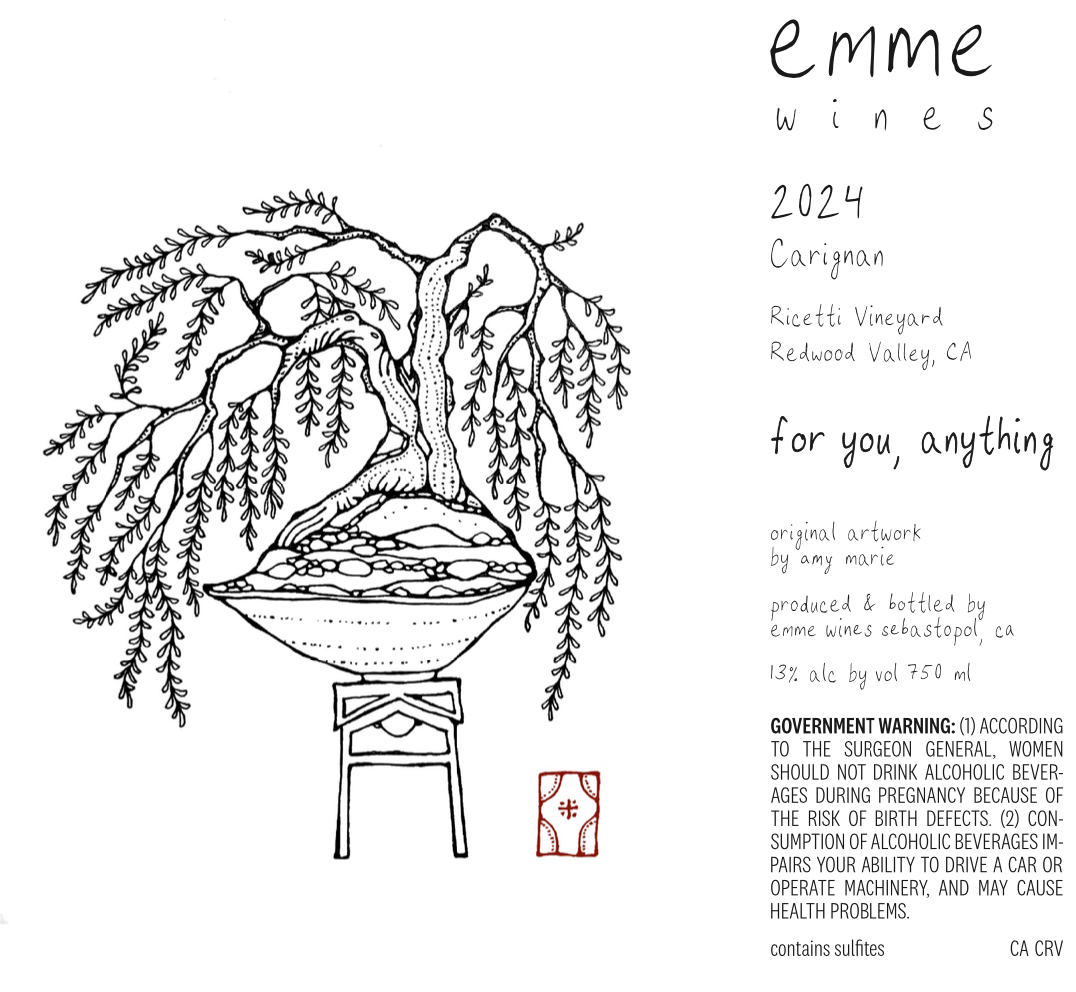
Carignan 'For You, Anything' Ricetti Vyd.
Organic. 100% Carignan, sourced from the dry-farmed Ricetti in the Redwood Valley AVA in Mendocino. The fall Carignan from Ricetti is the same fruit as the ‘enhorabuena’ spring rosé, but picked a few weeks later for more color, more tannin and a higher final alcohol. The fruit was fully foot crushed and placed into tank 100% whole cluster. After 8 days, the Carignan was pressed to tank to finish fermentation. Once dry, it was barreled down to neutral oak barriques. In Spring, the Carignan was racked to tank for bottling. 20 ppm SO2 at bottling, no other additions, unfined and unfiltered.

Valdigue 'Violet Sky' Ricetti Vyd.
Organic. 100% Valdiguié from the dry-farmed Ricetti Vineyard in Redwood Valley. The fruit was partially foot-crushed and fermented whole-cluster for fourteen days. It was pressed shortly before reaching complete dryness and finished primary fermentation in stainless steel. The wine was then transferred to neutral barriques for six months of aging and malolactic fermentation. It was racked to tank before bottling. Indigenous yeast fermentation. Unfined and unfiltered, with <30 ppm total SO2. The cuvée is named for the wine’s vivid violet color.
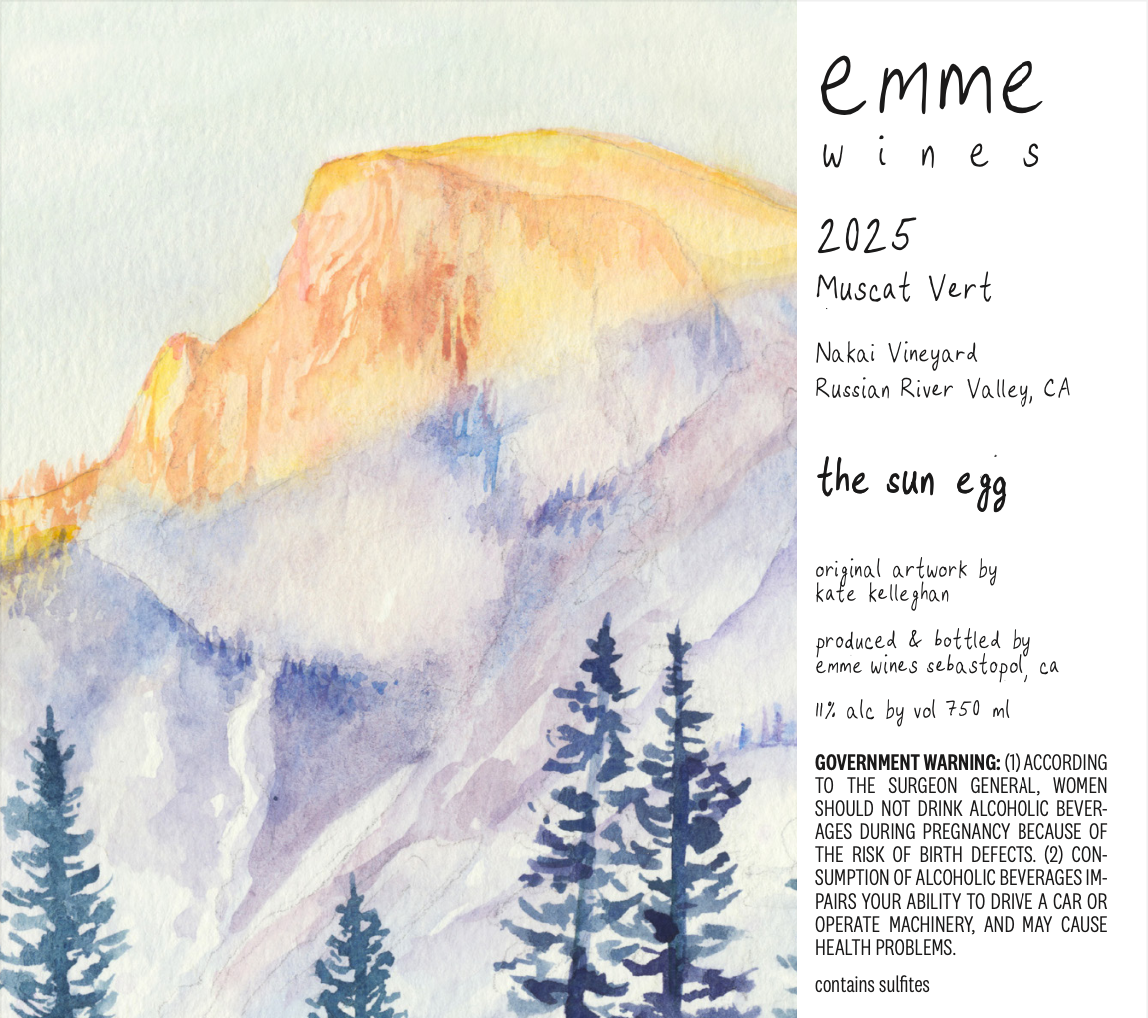
Muscat Vert 'The Sun Egg' Nakai Vyd.
Organic. 100% Muscat Vert from Nakai Vineyard, a dry-farmed site in the Russian River Valley. The fruit was directly pressed, settled overnight, and racked off gross lees to stainless steel for primary fermentation. After fermentation, the wine was divided between stainless steel and neutral oak barrels for five months of aging. The components were then racked together and blended before bottling. Indigenous yeast fermentation. Unfined and unfiltered, with <30 ppm total SO2. The Sun Egg is the title of a children’s book by Swedish author Elsa Beskow.
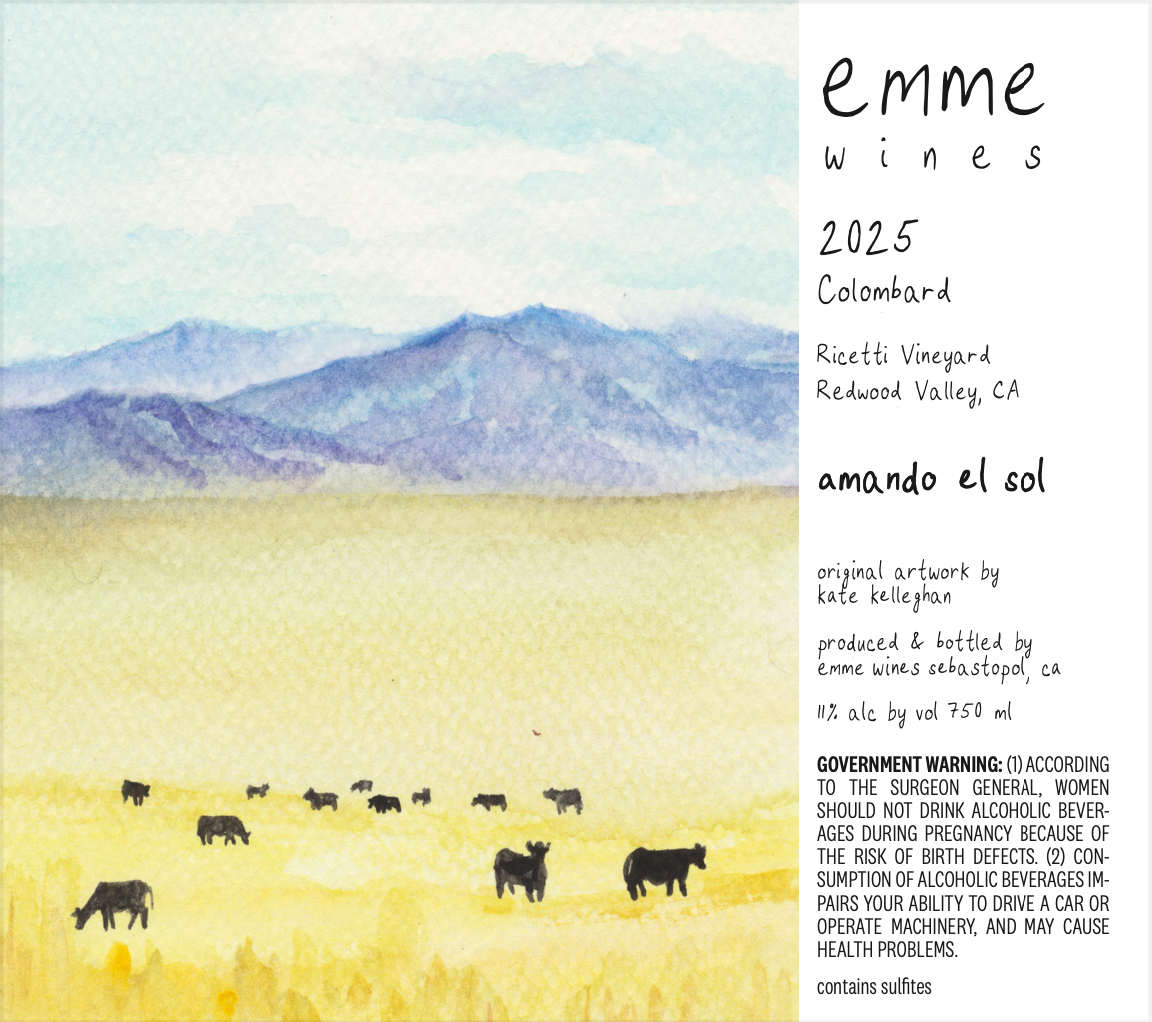
Colombard 'Amando El Sol' Ricetti Vyd.
Organic. 100% Colombard from Ricetti Vineyard, a dry-farmed site in Redwood Valley. The fruit was directly pressed, settled overnight, and racked off gross lees to stainless steel for primary fermentation. After fermentation, the wine was divided between stainless steel and neutral oak barrels for five months of aging. The two components were racked together and blended before bottling. Indigenous yeast fermentation. Unfined and unfiltered, with <30 ppm total SO2. Amando el sol means “loving the sun,” a reference to Colombard’s affinity for the warm days and cool nights of Redwood Valley.

Carignan Rose 'Enhorabuena' Ricetti Vyd.
Organic. 100% Carignan from the dry-farmed Ricetti Vineyard in Redwood Valley. Fruit was picked separately at lower ripeness for rosé, ahead of the Carignan destined for red wine. At the winery, the grapes were foot-crushed and left on the skins for several hours before being pressed. The juice settled overnight and was then racked off gross lees to stainless steel for primary fermentation, which proceeded slowly over approximately twenty days. After primary fermentation, the wine was divided equally between neutral oak and stainless steel barrels. Malolactic fermentation, aged for six months, then racked together to tank and blended before bottling. Indigenous yeast fermentation. Unfined and unfiltered, with <30 ppm total SO2. Enhorabuena means “congratulations,” or more literally, “in the good hour.”
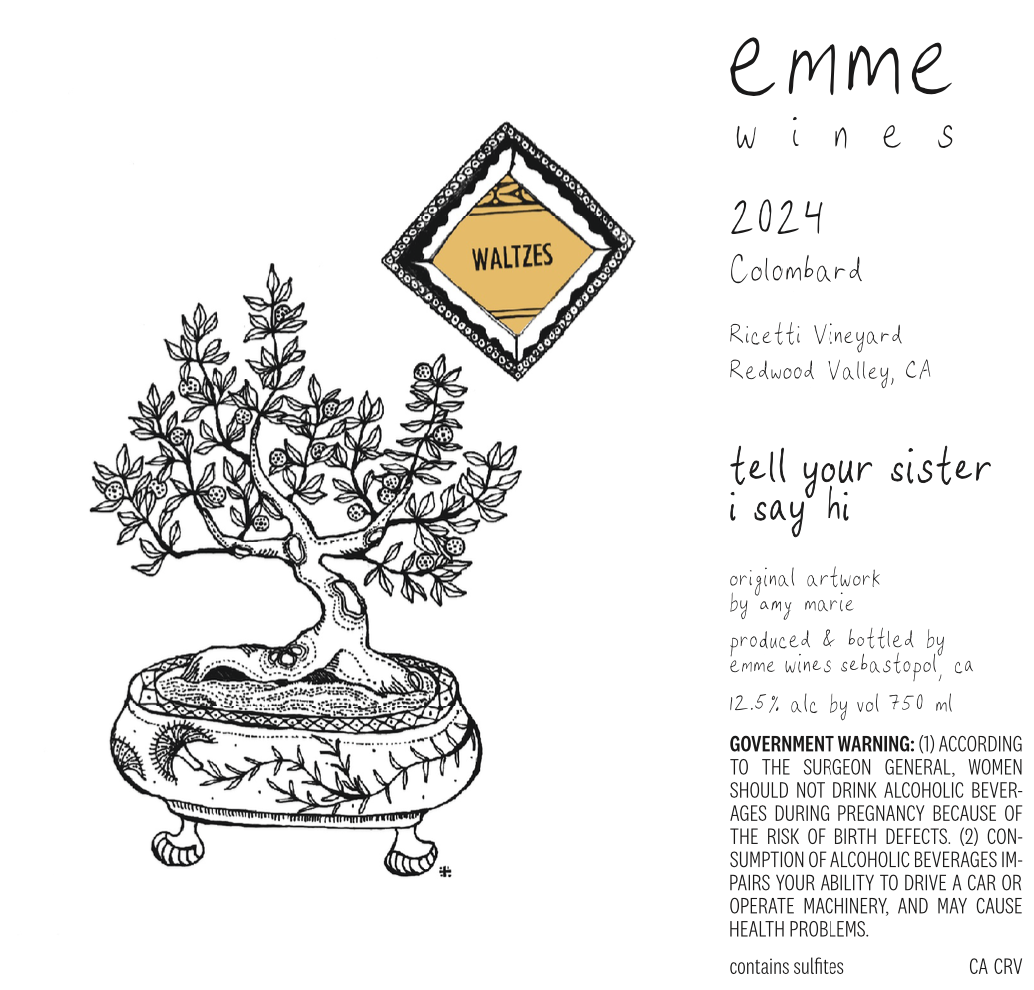
Skin Contact Colombard ‘Tell Your Sister I Say Hi’ Ricetti Vyd.
Organic. 100% Colombard sourced from the dry-farmed Ricetti in the Redwood Valley AVA in Mendocino. This Colombard was split into two halves after harvest; both lots were foot-crushed whole cluster in separate tanks. One lot was left on skins for a 48-hour cold soak, then pressed to another tank to ferment until dry. The second half of the Colombard was left crushed on skins for 10 days, allowing it to ferment until nearly dry on the skins making the resulting wine much more orange and textured than its sister. Both portions were aged separately over winter in neutral barriques then blended in Spring. 20ppm SO2 added at bottling, unfined and unfiltered.
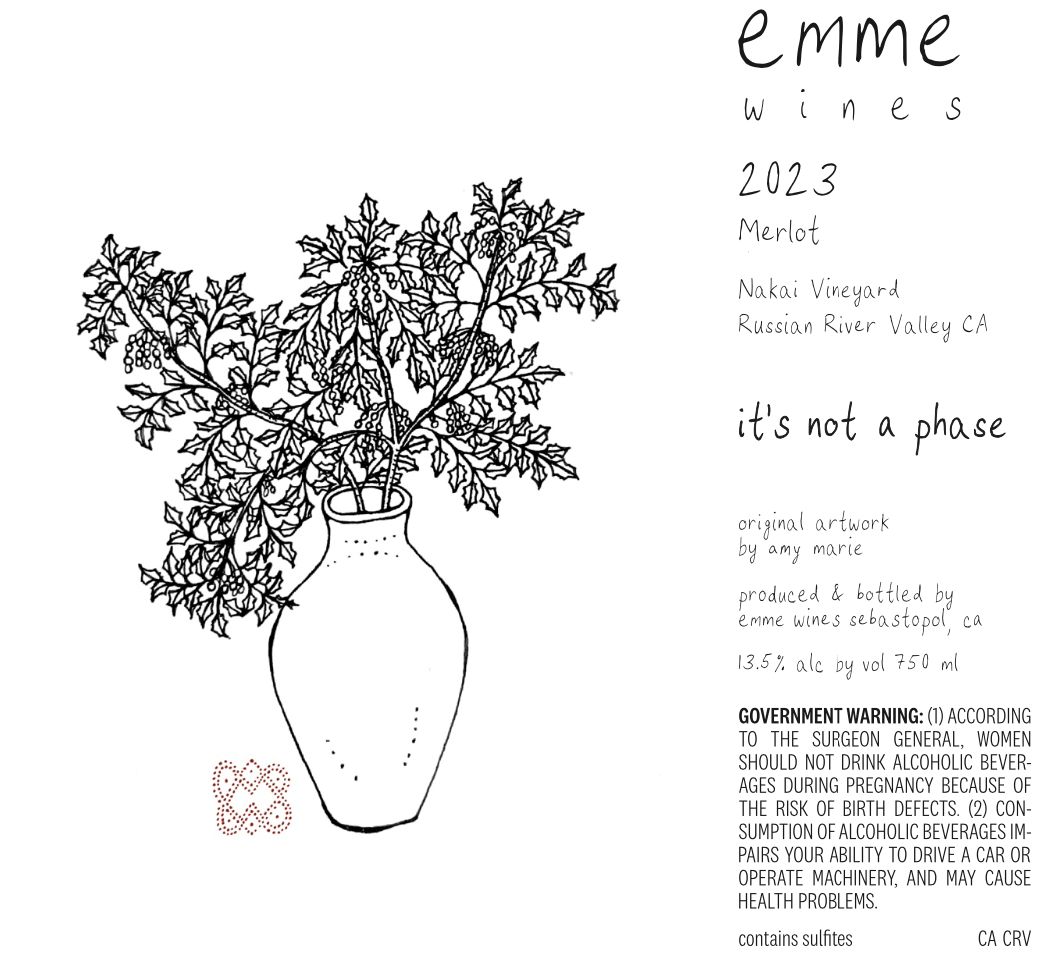
Merlot ‘It's Not A Phase’ Nakai Vyd. Russian River Valley
Organic. 100% Merlot sourced from the dry-farmed Nakai Vineyard in the Russian River Valley. The fruit was foot-crushed in tank and left to ferment 100% whole cluster – no destemming at all, which adds to the freshness of the final wine. After just over a week on skins, the Merlot was pressed to stainless steel to finish primary fermentation. Once dry, the wine was transferred to neutral oak barriques to go through malo and age on its lees for 10 months. All the barrels of Merlot were racked to tank prior to bottling. This wine has spent an additional year aging in bottle before release. Indigenous yeast fermentation. 25 ppm SO2 added at bottling, no other additions, unfined and unfiltered.
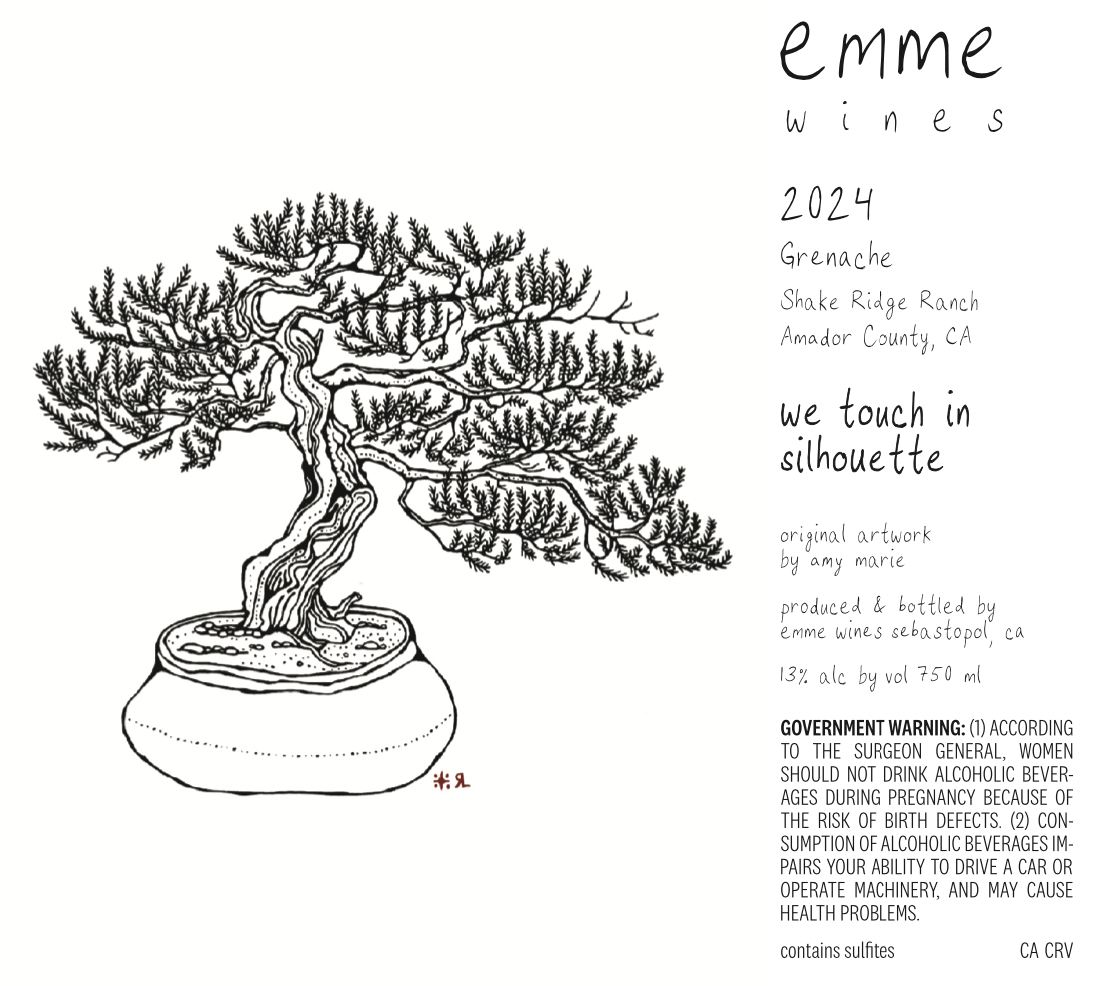
Grenache ‘We Touch In Silhouette’ Shake Ridge Vyd.
Organic. 100% Grenache. Shake Ridge Ranch is a magical vineyard, and the Grenache from here is extra special – light in color, beautiful aromatics, but with a consistently strong tannic backbone that makes the wine ageworthy. The Grenache was fully foot-crushed, and left to ferment 100% whole cluster in tank. After a short maceration of seven days on its skins, it was pressed, and the wine was returned to tank to finish fermenting. Once fermentation finished, the Grenache was transferred to neutral oak barriques and one puncheon, where it agedthrough the winter. In late Spring, all the barriques and puncheon of Grenache were racked to tank for bottling. 20 ppm SO2 added at bottling, no other additions, unfined and unfiltered.
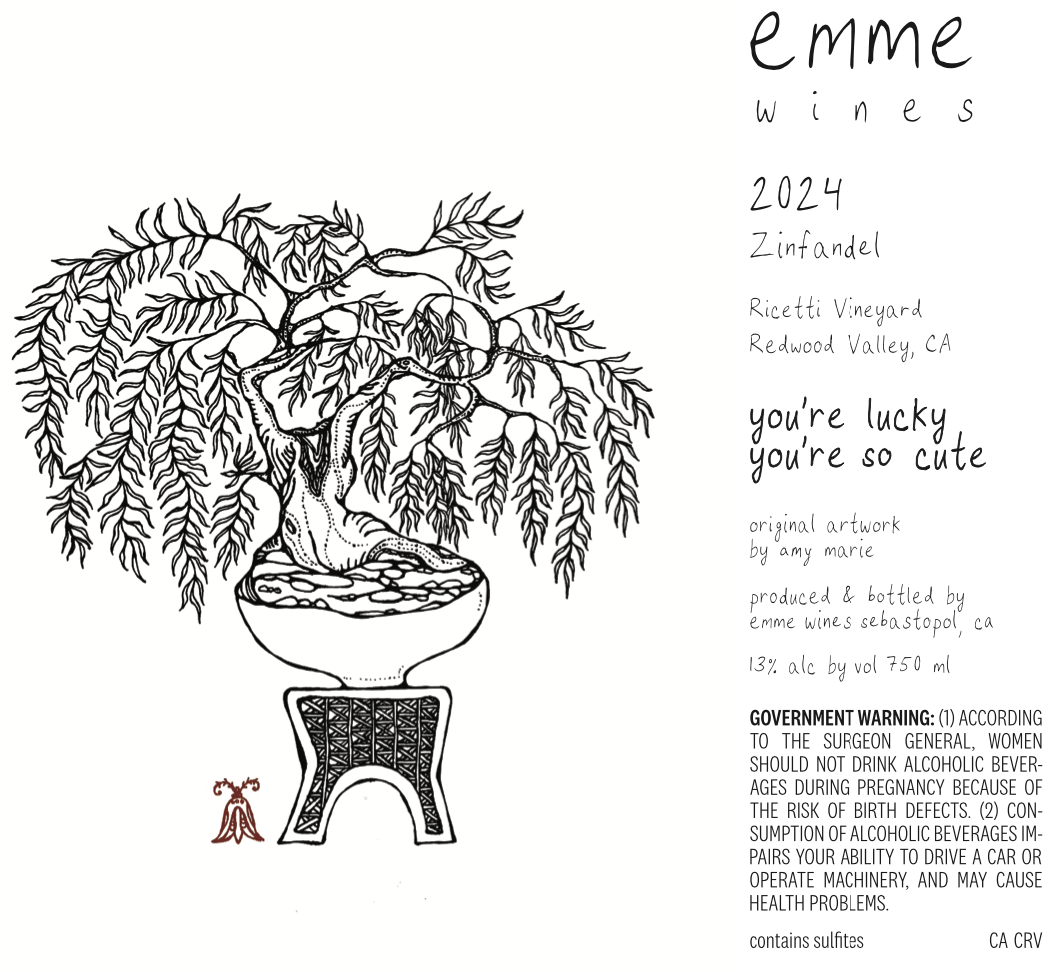
Zinfandel ‘You’re Lucky You’re So Cute’ Ricetti Vyd.
TEST - Organic. 100% Zinfandel sourced from the dry-farmed Ricetti in the Redwood Valley AVA in Mendocino. Once picked, the Zinfandel was fully foot crushed and placed into a stainless tank, 100% whole cluster. The fruit remained on its skins for 10 days, until it was nearly finished fermentation and ready to be pressed. Once pressed off its skins, the wine was returned to tank to fully finish fermentation, at which point the wine was then moved to neutral oak barriques to age over the winter. In late Spring, all the barriques of Zinfandel were racked to tank for bottling. 20 ppm SO2 at bottling, no other additions, unfined and unfiltered.
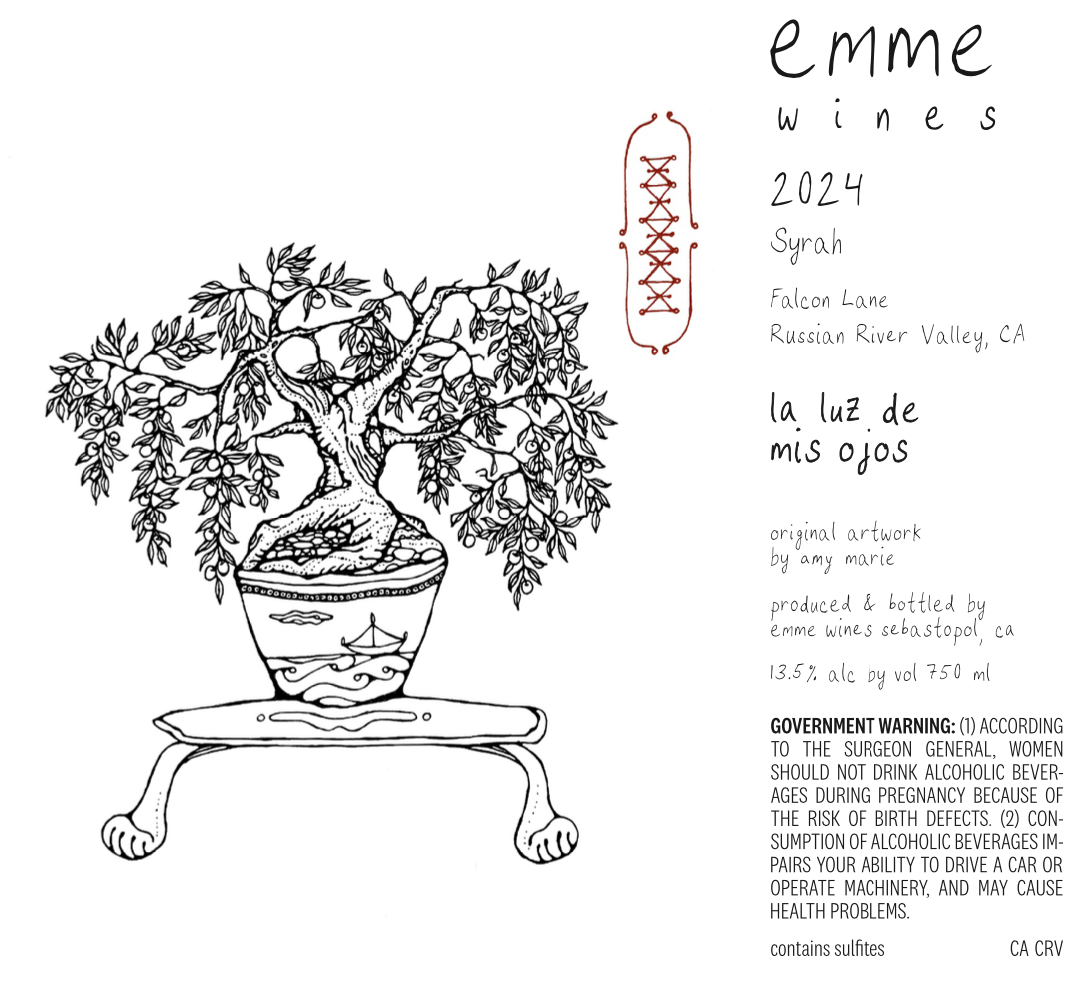
Syrah 'La Luz de Mis Ojos' Falcon Lane Vyd. Russian River Valley
Organic. 100% Syrah. Falcon Lane is a small, dry-farmed backyard vineyard in the Russian River Valley AVA that Rosalind has been farming herself since 2020. The vineyard was previously abandoned before she took over and started the long process of restoring these vines to health. The fruit is picked, foot crushed, and left to ferment 100% whole cluster with the stems for 8 days. Once dry it was pressed to two neutral barriques to undergo malo and age on the gross lees over the winter. In Spring, it was racked to tank then bottled. 20 ppm SO2 at bottling, no other additions, unfined and unfiltered.

Pinot Noir 'Pretty Like the Wind' Russian River Valley
Organic. 100% Pinot Noir from Chokmalichi Farm, a dry-farmed, three-acre family vineyard in the hills near Sebastopol. The fruit was foot-crushed and fermented whole-cluster. The wine remained on the skins for six days before being pressed to stainless steel to finish primary fermentation. It was then transferred to neutral oak barriques for malolactic fermentation and six months of aging. The wine was racked to tank before bottling. Indigenous yeast fermentation. Unfined and unfiltered, with <30 ppm total SO2. The cuvée name comes from a song lyric associated with the rolling hills of the vineyard.
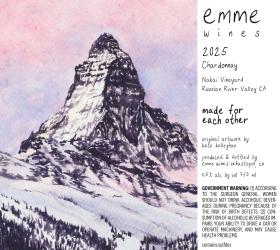
Chardonnay 'Made For Each Other' Nakai Vyd. Russian River Valley
Organic. 100% Chardonnay sourced from Nakai Vineyard, a dry-farmed site in the Russian River Valley. The Chardonnay was pressed directly at the winery and left to settle in a tank overnight for racking off gross lees. For Rosalind's other whites, she prefers fermentation in stainless steel tank for a clean, tight texture. Here she wanted more warmth and weight on the Chardonnay, so she instead opted for fermentation in partially filled neutral oak barriques. Once primary fermentation was finished, she topped the barriques and left the wine to go through malolactic fermentation and age on its heavy lees for 6 months. SO2: 20 ppm total. No other additions, unfined and unfiltered.
