
-1.png)
Nibiru
About
While Thürneustift is only 30 minutes by car (and they really want you to drive slow out here) from Arndorfer’s cellar, it’s nonetheless an entirely different world. Up until recently, the prevailing wisdom was that, really, it was too cold here entirely to make serious wine, just the anonymous 2 liter bottles locally called torpedoes and which, traditionally, were chaptalized all to hell and were often consumed mixed with soda. Josef, along with other growers in the vanguard of Northern Kamptal like Matthias Hager, are deep in the process of proving this wrong – in fact, the region’s climate is a blessing. Despite the utterly brutal summers lashing the region over the last few years, Nibiru’s wines still taste cool, fresh and light. While everyone else in the Kamptal is harvesting weeks early to avoid making 15% alcohol rieslings, Josef is getting phenolically ripe, beautiful fruit that still tastes refreshing.
Josef’s vineyards are for the most part, ancient terraces which he’s been tirelessly reviving in his “free time.” They are absolutely critical to his process, giving him a panoply of different wines to work with. As he tells us, “each terrace has its own terroir.” He favors old, high, and surrounded by forest vineyards, both for the characters they impart to the wine, but also to prevent any neighbors accidentally spraying chemicals on the vines – Joseph has been organic since 2015 and Demeter Certified biodynamic since 2022, which makes them seem almost impossibly green and humming with biodiversity. The vineyards, in general, seem quite bucolic and gentle, which is an illusion. Beneath the tiniest veneer of topsoil, you can see what intense rock the roots have sunk into – gnarled and banded amphibolite, which is incredibly hard and the breaking up of which Josef tells us, “builds character.” It’s clear that he is talking about the vines, but since 2018 he’s been carving and planting new terraces of his own so is rather more familiar with the effort of breaking up the mountains than most. There’s also a tiny smattering of limestone, which Josef saves for vines destined for sparkling wine, which any halfway competent observer could note that Josef is very talented at, even (especially?) if there’s not much of it.
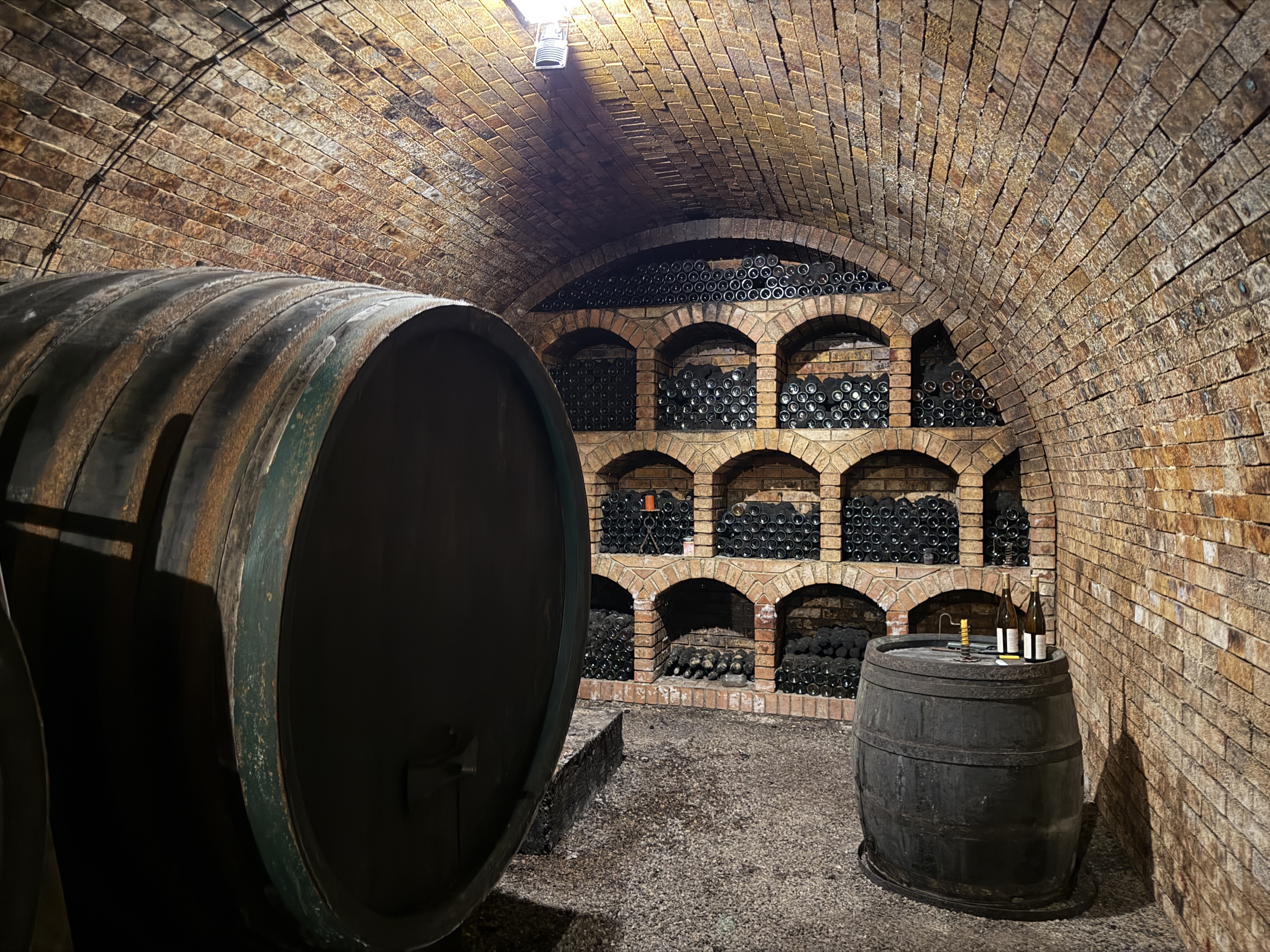
Josef maintains two cellars – one at the winery where fermentation and bottling takes place, and one carved into the rock under his family’s original vineyard where the wines age directly underneath his oldest vines. In both, Josef is largely hands off and intuitive – he’s been cutting inputs gradually since 2015 and experimenting with what makes sense for his wines. Non-negotiable is spontaneous fermentation, which helps preserve all the character he labored for so long in the vineyards to develop. Additionally, the wines all naturally undergo malolactic, crucial for balancing the searing acid from cool weather, hard soils and tightly wound grapes. Sulfur use is limited – Josef has gradually dialed in at around 20ppm additional, added after the last racking so the wines can integrate and recover before bottling.
Our last visit, which included blending trials for the exquisite Oida! Liter bottlings, was among the most impressive visits we’ve had with a producer, full stop. While Nibiru has long been one of the best values in our portfolio, recent releases have demonstrated that Josef has truly come into his own as a winemaker. His single vineyard bottlings, especially, demonstrate the depths of his talent and vision and immediately catapulted to the top of our must have list. We know you’ll feel the same. Going forward, we expect to have Oida! and Schoenberg (formally known as Grundstein) year round in quantity, with sparkling Muskateller whenever it’s available (hard to overstate just how delicious it is) and a rotating cast of single vineyard offerings, allowing Josef’s wines to play in just about any sandbox you’ve got. What’s more – because of the strength of the 2025 vintage and our enthusiasm, we’ve been able to negotiate sharper pricing across the board, which means that there’s simply no excuse for not going feral for these wines. We’re beyond proud of Josef’s work and evolution, and, at this point, are fully on board with whatever world ending he’s got planned – whatever comes next is sure to be delicious.
Products

Gruner Veltliner Schoenberg
Certified Biodynamic. 100% Grüner Veltliner from multiple vineyard sites in Schönberg. Schönberg is a high elevation plot near the northern end of the Kamptal Valley that features gneiss, slate, loess and loam. There is good exposure here so the fruit sees lots of sun during the day, and cool, windy nights. The grapes are whole bunch pressed to stainless steel and fermented spontaneously. Once dry, the juice is moved to neutral barrels for 8 months élevage on the fine lees, and bottled unfined and unfiltered with a small sulfur addition.

Blauer Portugieser Grundstein
Biodynamic. 100% Blauer Portugieser. The Portugieser is drawn from Nibiru’s Holzgasse vineyard in Mollands. The vines are about 25 years old, and the soil is dominated by loess & loam. Ferment was done with roughly 1/3 destemmed fruit and 2/3 whole clusters on top, fermented in stainless steel for ten days. One gentle pumpover per day, and kept on the fine lees in stainless steel until bottling. Unfined/unfiltered. This wine is a terrific argument for the quality and interest of Portugieser as a central European variety: Exceedingly bright and light in body, but not hard, with notes of cherry lozenge, forest fruit, black pepper, and a lovely bit of freshness. A keen analogue to a prettier, simple and light Beaujolais.

Oida! Red LITER
Certified Biodynamic. 70% Blauer Portugieser, 30% Merlot from vintages 2023 and 2025. Oida! Is meant to be a cheerful snapshot of the domaine at any given time, a loving homage to the Torpedo 2L bottlings of Josef’s youth. The fruit was entirely destemmed and fermented on the skins and raised in old and massive oak barrels in the aging cellar, with a sulfur addition after final racking and blending. Unfined, and unfiltered with ~20ppm SO2 addition.

Oida! White LITER
Certified Biodynamic. 80% Gruner Veltliner, 20% Gelber Muskateller from vintages 2024 and 2025. Oida! Is meant to be a cheerful snapshot of the domaine at any given time, a sort of Northern Kamptal Gemischter Satz. The Gruner Veltliner is direct pressed to steel, while the Gelber Muskateller is given 2 weeks of skin maceration. The wine rests on full lees for six months and then is racked to fine lees, given a small dose of sulfur, and then blended. Unfined, and unfiltered with ~20ppm SO2 addition.

Gelber Muskateller Ancestrale
Certified biodynamic. 100% Gelber Muskateller. Taken from two vineyard sites at 20-25 years of age. Fermentation begins in stainless steel, then when the wine is around 20g/l residual sugar, it's bottled to trap bubbles. Aged on lees for about five months in bottle, then disgorged in Feb/March of 2026. 15 ppm SO2 added at disgorgement.
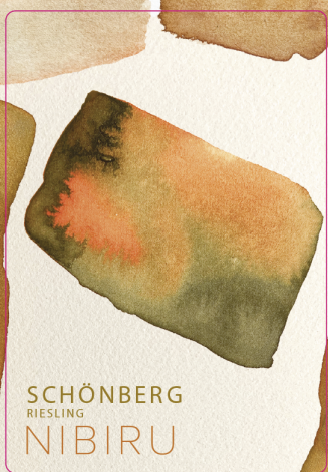
Riesling Schoenberg
Certified Biodynamic. 100% Riesling from multiple vineyard sites in Schönberg. Schönberg is a high elevation plot near the northern end of the Kamptal Valley that features gneiss, slate, loess and loam. There is good exposure here so the fruit sees lots of sun during the day, and cool, windy nights. The grapes are whole bunch pressed to stainless steel and fermented spontaneously. Once dry, the juice is moved to neutral barrels for 8 months élevage on the fine lees, and bottled unfined and unfiltered with 20ppm additional SO2.
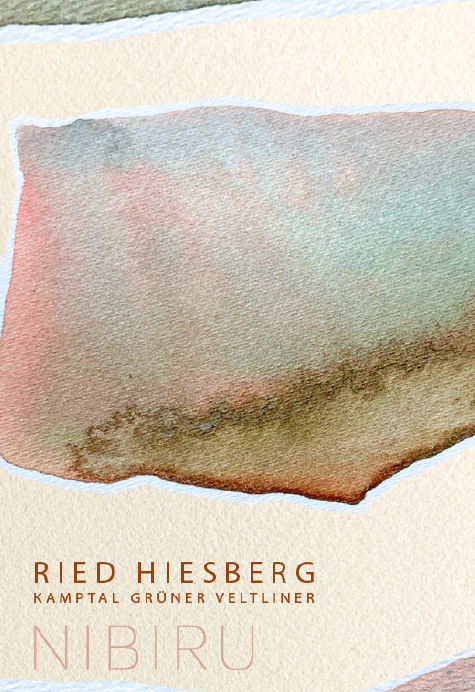
Riesling Hiesberg
Certified Biodynamic. 100% Gruner Veltliner from the highest point of the village Mollands, on light sandy loess soil with rose quartz. The vineyard are around 35 years old and have been farmed biodynamically since before Josef bought it in 2015. This is Josef’s finest Gruner, and in our opinion the final word on what the Northern Kamptal brings to the table. Whole bunch pressed to an old 3000L barrel, and aged on the fine lees in the same. Bottled unfined, unfiltered, and with 20 ppm additional SO2.
Gruner Veltliner Ried Heisberg Kamptal
Certified Biodynamic. 100% Gruner Veltliner from the highest point of the village Mollands, on light sandy loess soil with rose quartz. The vineyard are around 35 years old and have been farmed biodynamically since before Josef bought it in 2015. This is Josef’s finest Gruner, and in our opinion the final word on what the Northern Kamptal brings to the table. Whole bunch pressed to an old 3000L barrel, and aged on the fine lees in the same. Bottled unfined, unfiltered, and with 20 ppm additional SO2.
