
Vitacee
About
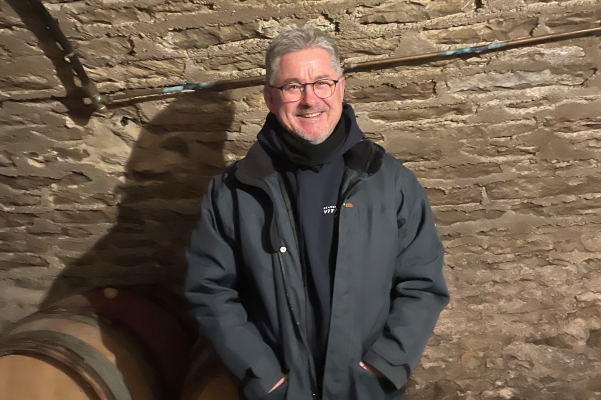
David’s been making burgundy since 1998, starting at Bernard-Bonin in Meursault, before heading to Jean-Phillippe Fichet and, finally, from 2008 until quite recently he worked as the Maitre de Chai and second in command at Domaine des Croix, with a portfolio of responsibilities over nearly every aspect of production. In addition to making wine, David’s also been shaping the future of Beaune, teaching winemaking as a career at a local school. This goes a long way towards explaining his preternatural avuncularity and magnificent patience and also, his insatiable curiosity towards the terroirs that surround him.
Specifically, David’s curious about the Macconais, the southernmost part of Burgundy, and nearby Monthelie, where he sources organic fruit from “people I like working with.” These two terroirs, he tells us, he will always strive to bottle, as he finds they have much to say. David often collaborates on buying fruit with other mico-negociants of note, including Bastian Wolber of Laisse Tomber and Jonathan Purcell of Vin Noe. The fruit David gets he presses and often ferments at Domaine des Croix then ages the wines in his own space using old wooden barrels he can get down via the trapdoor that looks out onto the street. All David’s ferments are native, and he avoids sulfur usage until bottling, when a scant 15ppm is added, along with a gentle filtration to make sure the wine is pristine. That being said, he reserves the right to change things up in future vintages, should he feel other techniques show the terroir more clearly, telling us “people get accustomed to doing things the same way, even if they don’t need to.”

Products
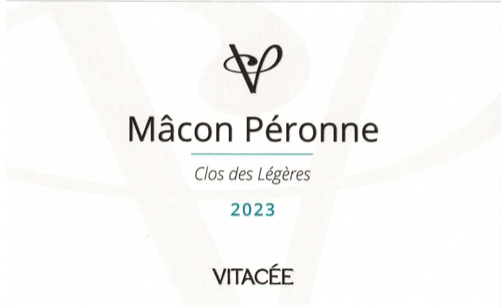
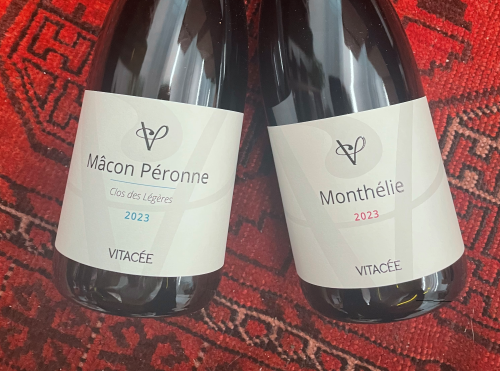
Macon-Peronne ‘Clos des Legeres’
Organic. 100% Chardonnay, from a Lieu-Dit planted in the early 80s on clay-limestone soil in the commune of Perrone in the north of Macon. This vineyard is partially cover-cropped and tended by horses. Spontaneously fermented and aged for 12 months in old barrels, racked and settled in stainless steel barrels before bottling. 15ppm SO2 added before bottling and lightly filtered. A high tone wine with notes of whipped ricotta and lemon – a confident bottling that feels like an introduction to a new classic.
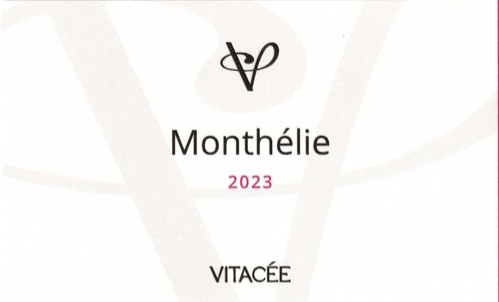
Monthelie
Organic. 100% Pinot Noir from a single midslope parcel in Monthelie with strong wind pressure and a thicker layer of clay over limestone. Entirely destemmed for this vintage to better express terroir, fermented for 14 days in steel tank with pumpovers every other day and several punch downs towards the end of fermentation. Aged 14 months in used barrels, very lightly filtered and with 15ppm SO2 added at bottling. Our tasting notes for this wine were “hot damn” – a truly lithe and elegant pinot with something to prove.
